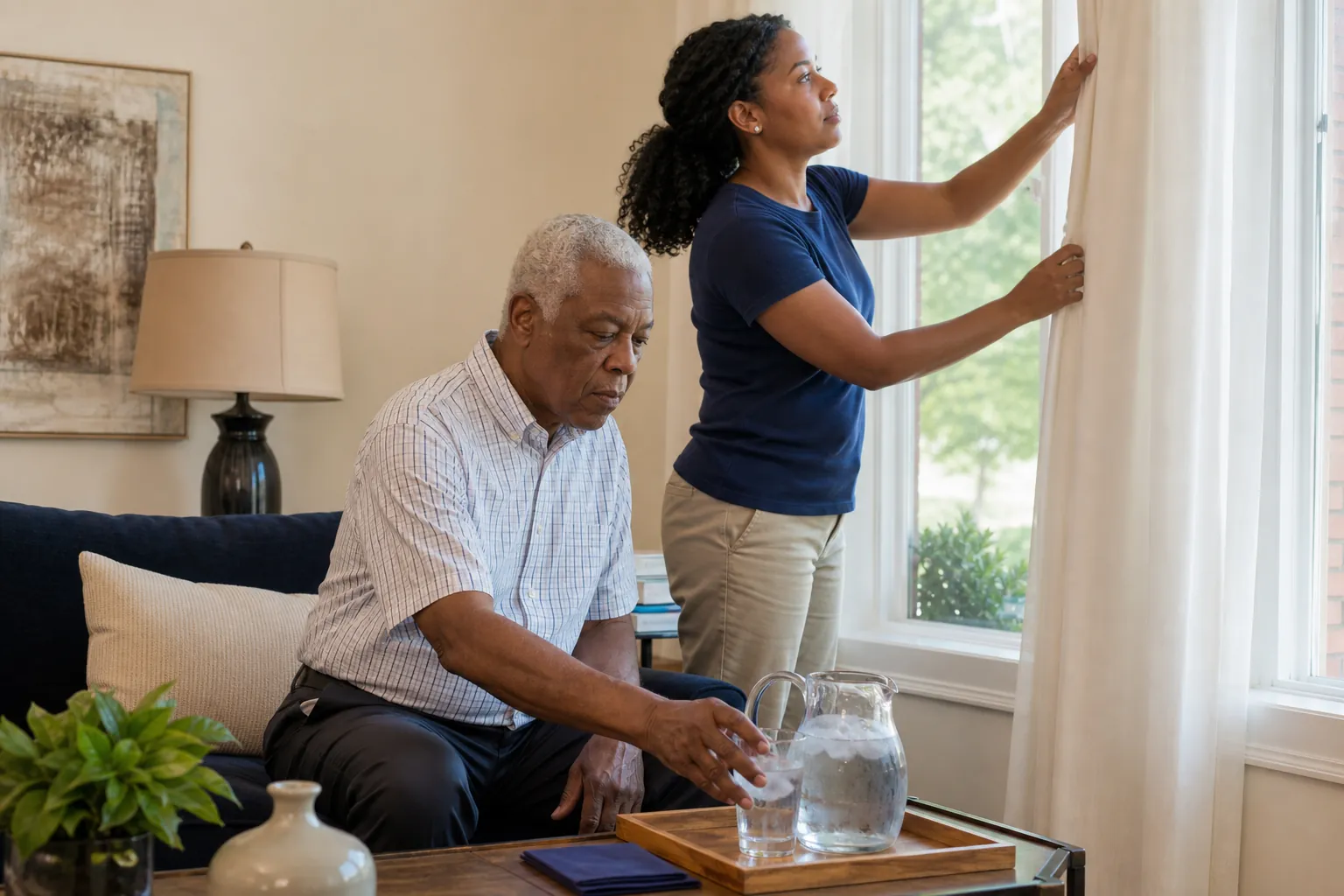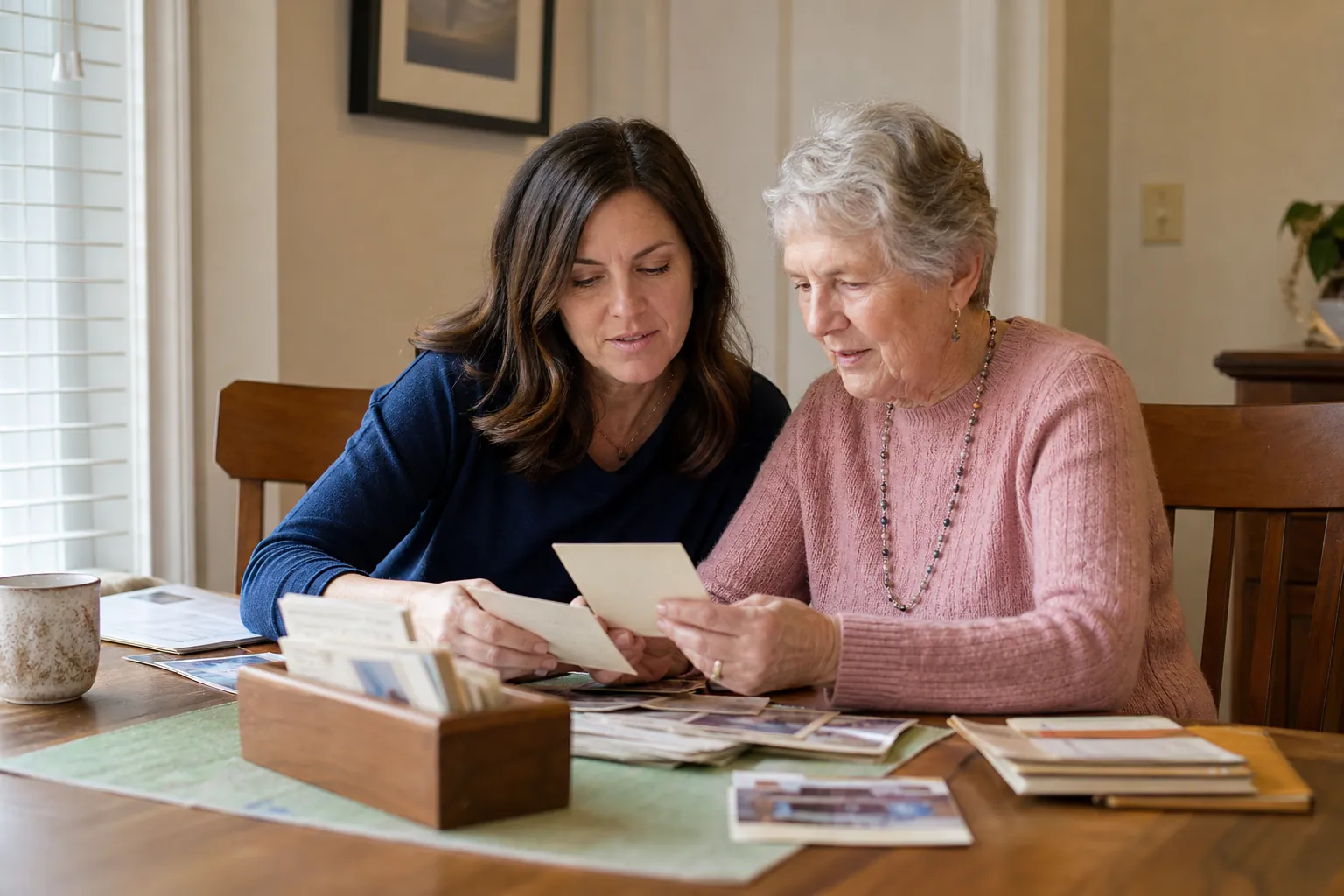
A parent who says “I’m fine” every Sunday can be fine, or can be skipping meals, missing pills, and avoiding the stairs. For an adult child who lives far away, a holiday visit may be the first chance in months to see the house, the refrigerator, and the parent’s ordinary day in person. This guide is for that visit.
The goal is to collect facts while you are there. Decisions can wait until after the holiday, when the family can talk calmly.
Look at the house
The refrigerator and pantry. Expired food, very little food, or the same few items repeated can mean shopping or cooking has become hard.
The mail. Unopened bills, late notices, or many charity solicitations are worth a quiet look.
The medications. Pill bottles in several places, old prescriptions next to new ones, or a pill organizer that is full on days that have passed.
The stairs, bathroom, and entrances. Loose rugs, poor lighting, a bathroom with nothing to hold onto, or a path cleared through clutter.
The car. New dents or scrapes are easier to see in person than to ask about.
Look at the day
Spend at least part of the visit on an ordinary day rather than only the holiday meal. Watch how your parent gets up from a chair, moves through the house, and handles a normal morning. Notice whether they repeat a question or a story within the same conversation, or seem more tired than last time. Notice what they no longer do: a hobby dropped, a friend no longer mentioned, church or club skipped.
Write it down as facts
Write what you saw, with the date, rather than what you think it means. “Three unopened bills from the power company, the oldest from August” is more useful to a doctor or a sibling than “Dad’s struggling with money.”
OPA’s guide to writing down what you see shows the format, and the free Observation Log is built for it. If siblings take turns visiting through the season, a shared record lets each visitor see what the last one noticed.
What to do with what you find
Some of what you notice belongs with your parent’s doctor: new confusion, falls, weight loss, or medication mix-ups. A sudden change in thinking over hours or days is a reason to call the doctor the same day. It can come from an illness that needs treatment.
Some of it belongs in a family conversation after the holiday. The Operational Reliability Check-In gives the family ten questions to answer together, such as who notices changes and what happens if the main caregiver is unavailable.
And some of it can be fixed before you leave: a night light, a cleared walkway, a current medication list on the refrigerator.
A first step for this visit
Bring a notebook. Before you leave, write down five things you saw, each with the date. Share them with one sibling or one other family member before the drive home ends.
If what you see suggests your parent needs help on some days or some hours, see how care starts at OPA.
This is general information, not medical advice. Bring new symptoms and safety concerns to your parent’s clinician, and call 911 for an immediate emergency.
For a reliable next step, use National Institute on Aging caregiving guidance for the official details, then use personal care at home when your family needs to organize support at home.
For a related decision, CDC guidance on older-adult safety can help frame the question, and this site’s observation-log guide offers a practical next step.
Families can also compare the next handoff with OPA’s Care Coordination Grid.