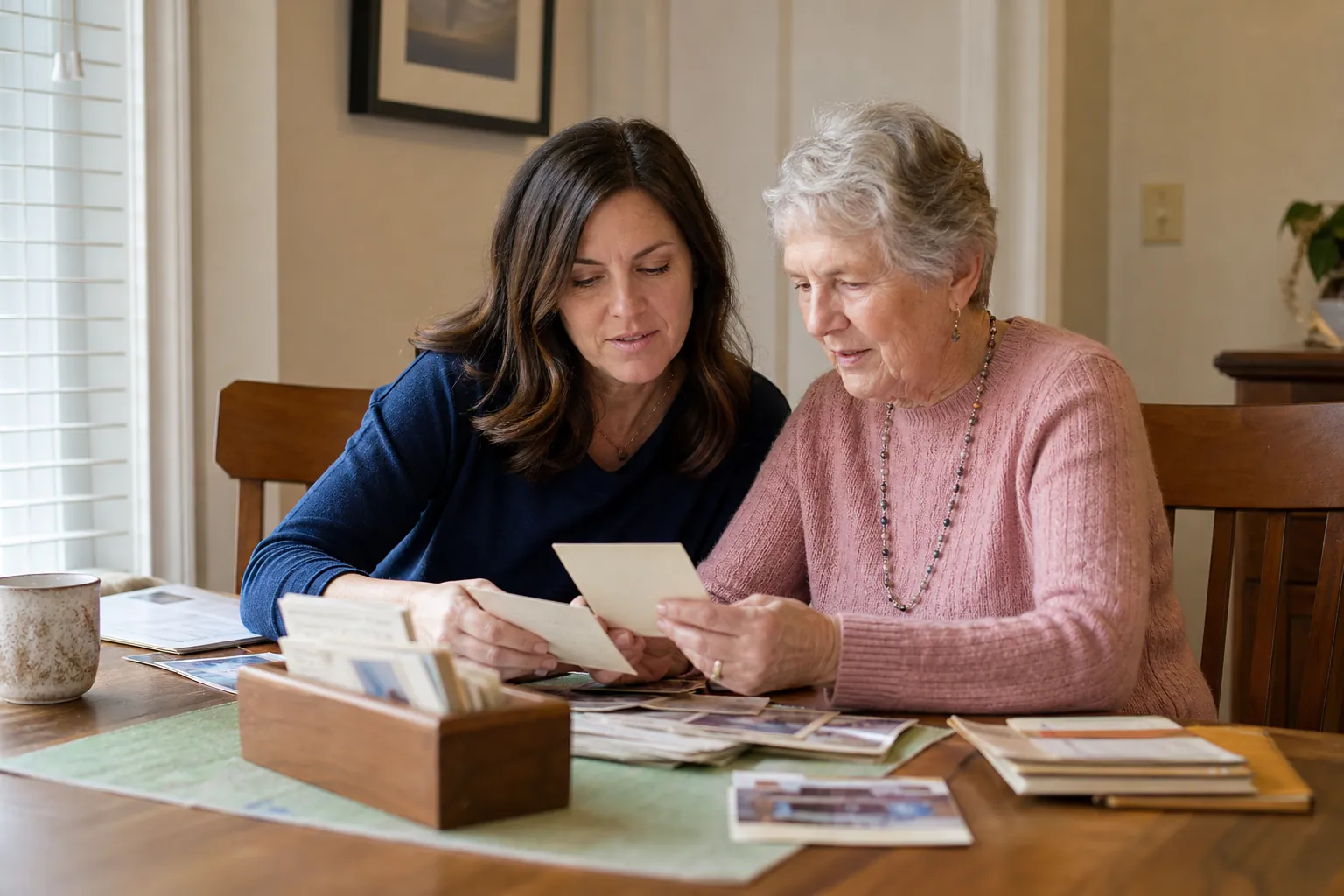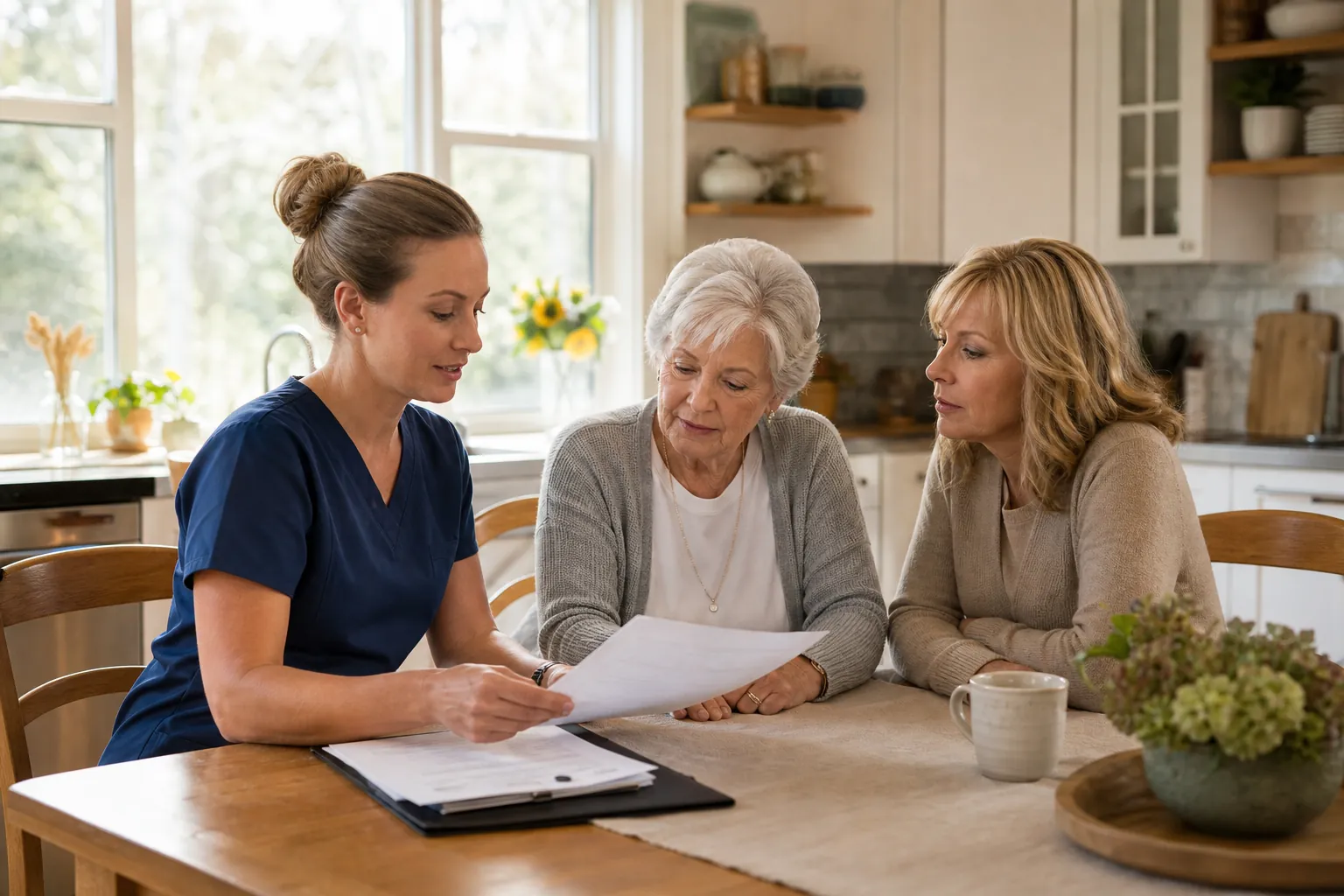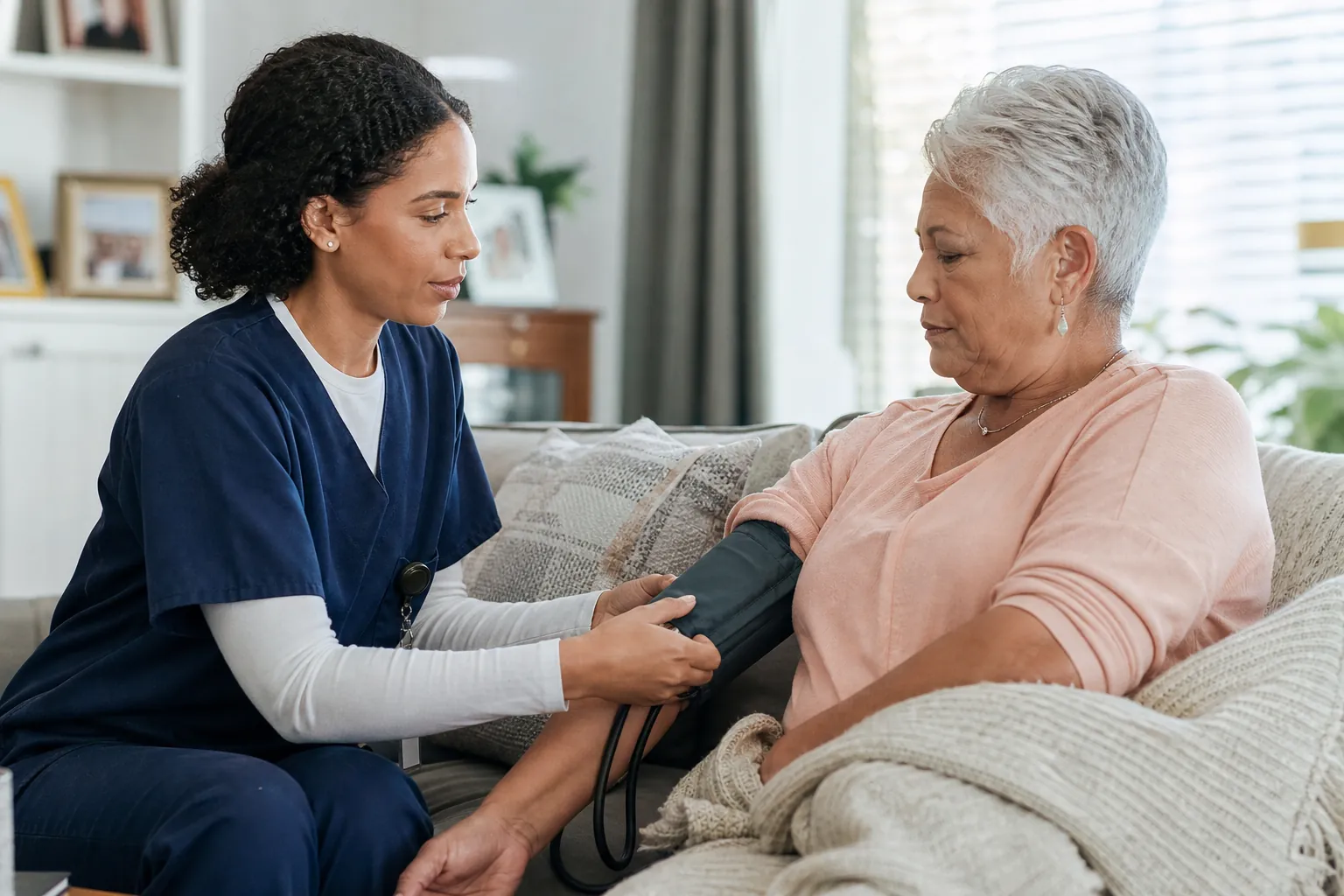
Cancer treatment follows a calendar. There are treatment days, the days just after, and the days when the body recovers before the next round. Each kind of day needs different help at home.
This guide is for families supporting someone through cancer treatment at home. The treatment team directs all medical care; this guide covers help at home.
Map the treatment calendar
Ask the treatment team for the schedule and write it on one calendar the whole family can see. For each treatment, ask:
How long will the visit take, and can the person drive afterward?
Which days after treatment are usually hardest?
When is the person most at risk of infection?
Which symptoms should prompt a call, and to which number, day and night?
Plan the help by type of day
Day
Help that often matters
Treatment day
A ride there and back, a companion during long infusions, a simple meal waiting at home
The days just after
Help with bathing and dressing, small meals, fluids, rest, someone nearby at night
Recovery days
Errands, laundry, light housekeeping, company, short walks if the team approves
Take infection seriously
Some cancer treatments lower the body’s ability to fight infection. The CDC tells patients receiving chemotherapy to call their doctor right away for a temperature of 100.4°F (38°C) or higher, even in the middle of the night, because it can be an emergency (CDC).
At home, that means:
Keep a working thermometer and write down temperatures when the team asks
Everyone in the home washes hands often, including caregivers when they arrive
Visitors and caregivers who are sick stay away
Post the treatment team’s after-hours number on the refrigerator
Look after the main caregiver
Treatment can last months. Plan relief for the main caregiver early, especially for the hardest days after treatment. OPA’s free Getting a Week Off worksheet helps.
Keep one record
Write down symptoms, temperatures, what the person ate and drank, and questions for the next visit. OPA’s free Appointment and Transition Prep worksheet keeps questions and answers together.
A first step this week
Write the next month of treatment dates on one calendar, mark the days after each treatment, and name who will be with the person on each of those days.
To arrange help at home on the days after treatment, see how care starts at OPA.
This is general information, not medical advice. Follow the treatment team’s instructions, and call 911 for an immediate emergency.
Clinical guidance for the home plan
The National Cancer Institute's side-effect guidance explains that treatment effects vary between people. Use this guidance to prepare questions for the treating team; the person's own clinical instructions determine the care plan.
The National Cancer Institute's infection guidance warns that infections during treatment may require urgent medical attention. Use this guidance to prepare questions for the treating team; the person's own clinical instructions determine the care plan.
Turn the instructions into a shared home plan
Use the Care Coordination Grid from OPA's Knowledge Center to name who handles appointments, daily routines, and the next handoff. Keep the treating team's instructions and contact details alongside the schedule. Talk with OPA about personal care at home when the household needs another layer of help, and confirm the specific tasks and schedule before care starts.