
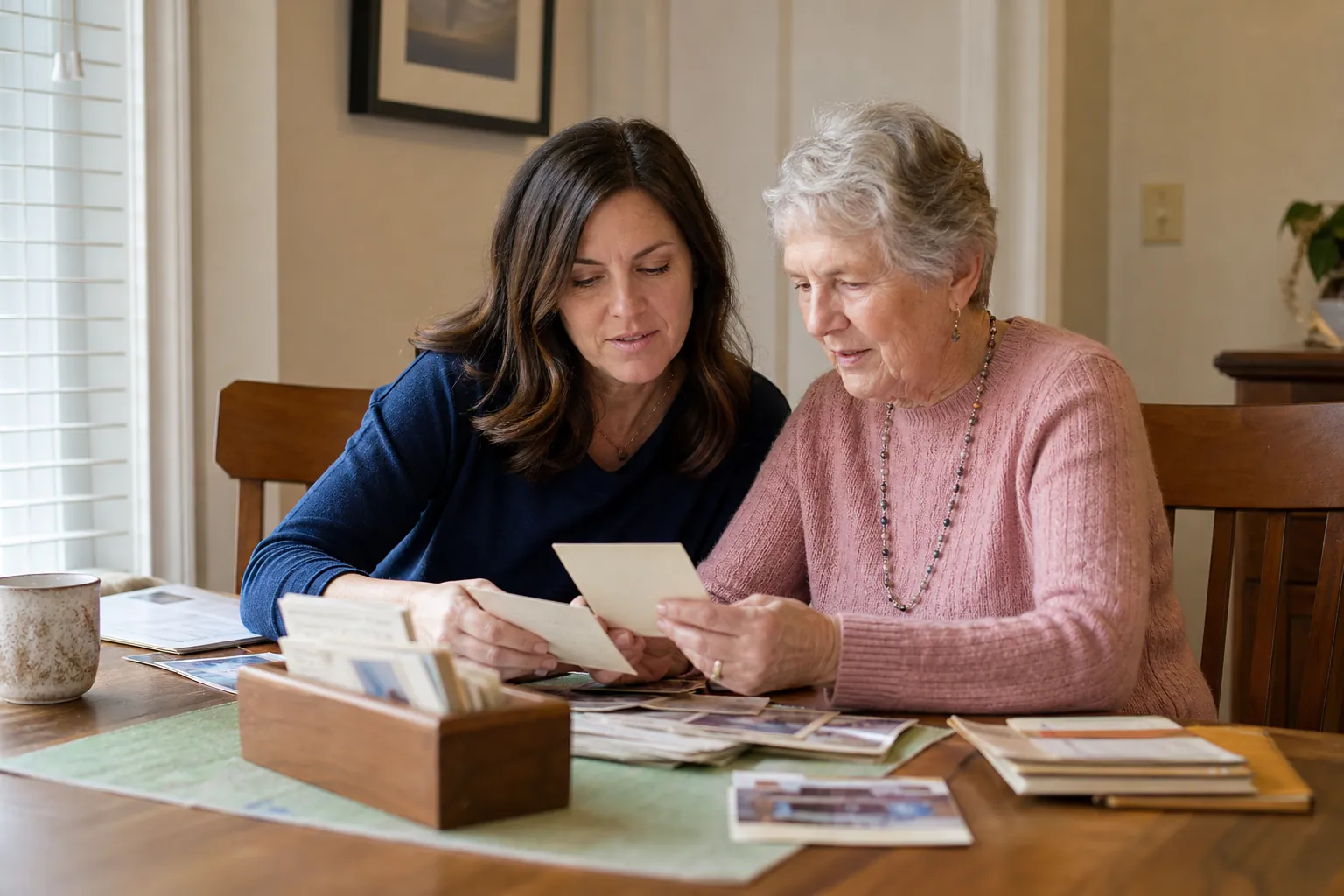
A phone already does the work of a recorder. What a family needs is a plan: a quiet hour, a short list of questions, and a place to keep the files.
Ask first, and say who will hear it
Ask the person whether you may record. Say who will hear the recording, such as the grandchildren or the whole family.
Set up the session
Use the voice memo app on a phone. Video is fine if the person is comfortable with it.
Pick a quiet room. Turn off the television and move away from a running dishwasher or fan.
Put the phone close to the person, on a book or a folded towel so it does not pick up table noise.
Keep each session to 20 or 30 minutes. For a person who tires, plan several short sessions.
Say the date and the person’s name at the start of each recording.
Questions that open stories
Ask questions that need a story for an answer:
Where did you grow up, and what did your street look like?
What was your first job, and what did you earn?
How did you meet your husband (or wife)?
What was the hardest year of your life, and how did you get through it?
What do you want your grandchildren to know about our family?
After an answer, wait a few seconds before asking the next question.
Questions about wishes
A separate session can cover what the person wants as health changes:
What makes a day worth living for you?
If you became very sick, what would matter most to you?
Who should speak for you if you cannot speak for yourself?
Where do you want to be cared for?
OPA’s guide to the goals-of-care conversation walks through this conversation in more detail.
Put the wishes into signed documents
Doctors and hospitals act on signed documents. In Georgia, the Georgia Advance Directive for Health Care names a health care agent and records treatment preferences. OPA’s guide to power of attorney, the health care agent, and HIPAA explains which document does what. Use the recording to help the person decide what goes in the documents, and then complete the documents.
Keep the files safe
Name each file with the date and topic, such as “2026-01-03 Dad Navy years.”
Keep copies in two places, such as a cloud account and a USB drive.
Write down where the files are and put that note in the family’s Next-of-Kin Box.
A first step this week
Write five story questions, charge your phone, and ask for 20 minutes this weekend.
If help at home would give your family more time together, see how care starts at OPA.
Rules on advance directives change. Confirm current requirements before acting. Confirm which documents apply with a licensed Georgia attorney. This is general information, not legal advice.
