
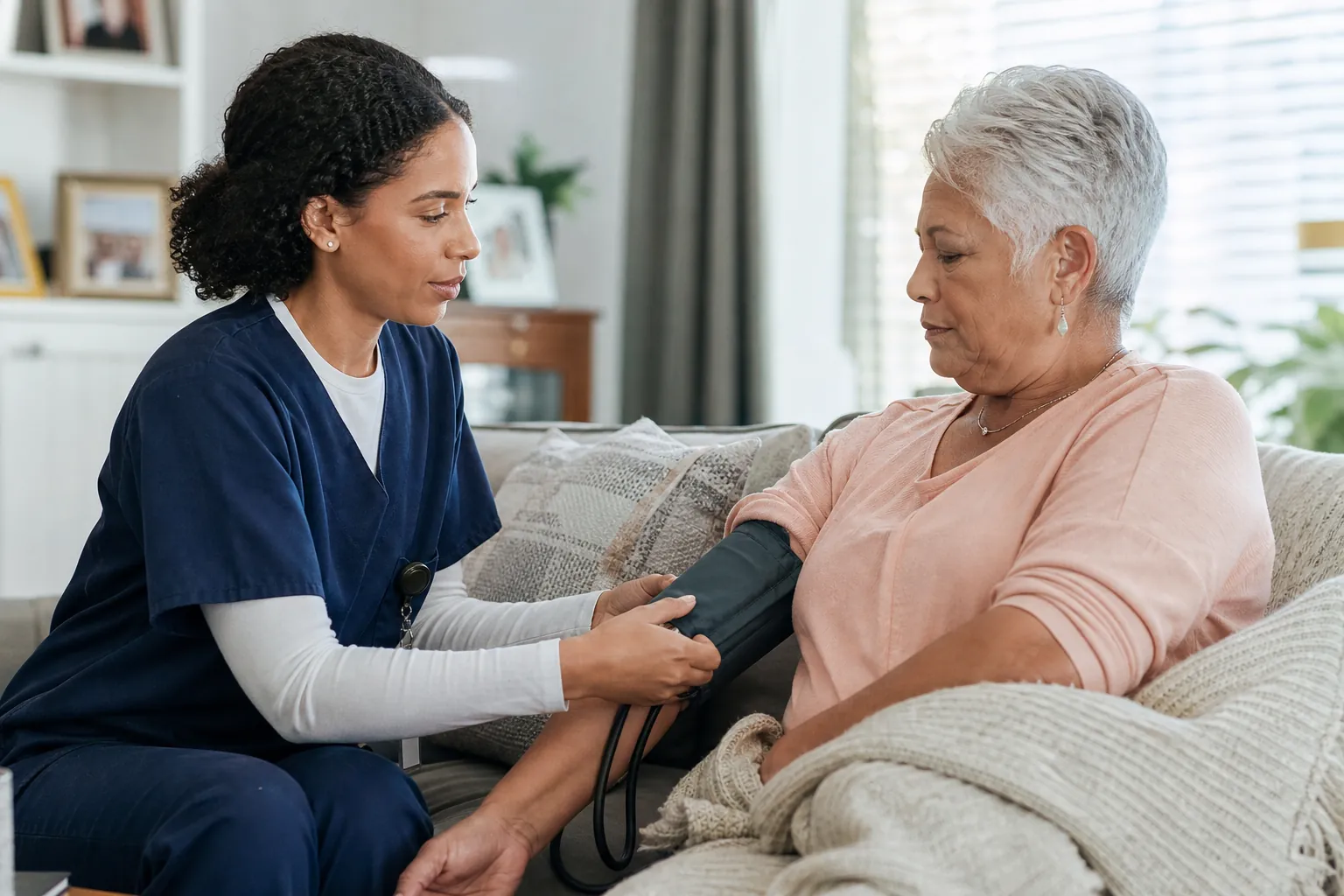
Oxygen therapy lets many people with lung or heart disease stay active at home. It also changes the safety rules of the house. Oxygen does not burn by itself, but it makes anything that is burning burn faster and hotter. A spark that would normally go out can become a fire.
This guide is for families and caregivers in a home where someone uses medical oxygen.
Household rules
Guidance from one health system (Atrium Health Wake Forest Baptist):
No smoking anywhere in a home where oxygen is in use. Post “no smoking” signs inside and outside.
Keep flames and heat away. Keep the oxygen at least 10 feet from candles, gas stoves, fireplaces, space heaters, and other ignition sources.
Avoid oil-based products near the oxygen, including petroleum jelly, oil-based lotions, lip balm, and aerosol sprays. Ask the clinician for a water-based alternative.
If a fire starts, turn off the oxygen if it is safe to do so, leave the house, and call 911.
Everyone who comes into the home, including visitors and paid caregivers, needs to know these rules.
Equipment questions for the supplier
How do we clean and maintain the concentrator and tubing, and how often?
How long do the backup cylinders last at the prescribed flow rate?
How should cylinders be stored, and how many may we keep?
What do we do if the concentrator alarms or stops working?
Who do we call after hours?
Clinical questions for the care team
What flow rate is prescribed, and when should the oxygen be used: all day, at night, or with activity?
When, if ever, may the flow rate be changed, and by whom?
Which symptoms mean we should call you, and which mean we should call 911?
Are there skin problems to watch for where the tubing touches the face and ears?
Write the answers down and keep them with the equipment. OPA’s guide to winter storms and power outages covers what to do when the power goes out.
What a caregiver can do
A home care aide can help keep the home safe around the oxygen, help the person move with the tubing, and watch for changes such as more breathlessness or confusion, then report them. An aide does not change the flow rate. The flow rate changes only as the written order allows.
A first step this week
Walk through the house and move every candle and heater at least 10 feet from where the oxygen comes out. Replace oil-based lotions and lip balm with water-based ones the clinician approves. Post the no-smoking signs.
If your family member needs help at home or skilled nursing, see how care starts at OPA.
This is general information, not medical advice. Follow the instructions of the person’s clinician and oxygen supplier, and call 911 for an immediate emergency. Rules on what aides and nurses may do are set by state law and provider policy. Confirm current requirements before acting.
Guidance behind the home plan
MedlinePlus's home-oxygen instructions explain that a concentrator needs electricity and that the oxygen flow should not be changed without the provider's direction. Use the person's own clinical instructions when arranging care.
MedlinePlus's oxygen-safety guidance warns that oxygen speeds burning and that smoking, ignition sources, and tangled tubing create hazards. Use the person's own clinical instructions when arranging care.
Turn the instructions into a shared home plan
Use the Care Coordination Grid from OPA's Knowledge Center to name who handles appointments, daily routines, and the next handoff. Keep the treating team's instructions and contact details alongside the schedule. Talk with OPA about skilled nursing at home when the household needs another layer of help, and confirm the specific tasks and schedule before care starts.
