
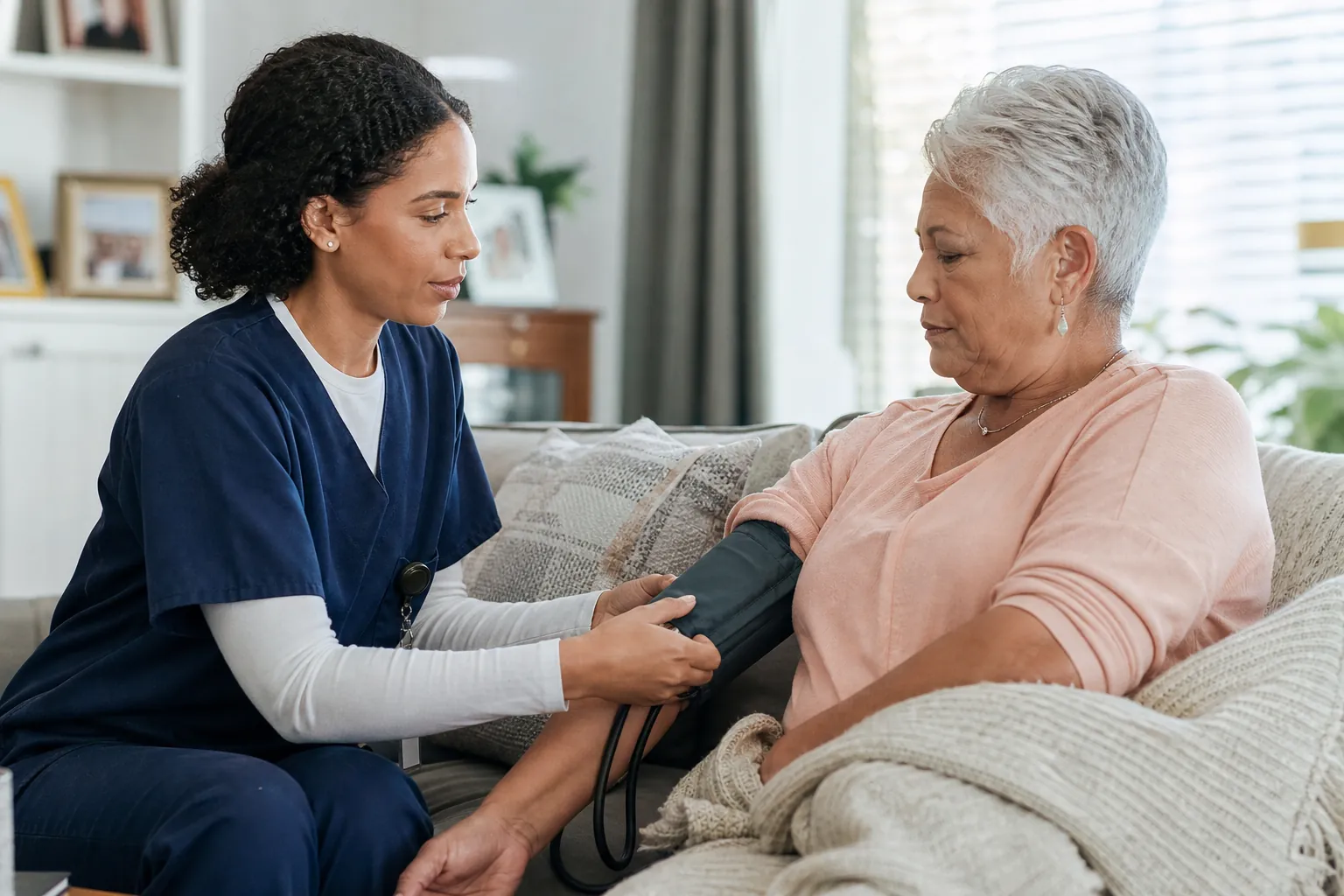
A wound that needs care at home can come from surgery, a fall, a pressure injury from lying or sitting too long, or a sore on the foot of a person with diabetes. Each one has its own treatment, ordered by the clinician. At home, the questions are practical: who changes the dressing, how often, with what supplies, and what to do when something looks wrong.
This guide is for families preparing to manage a wound at home. It lists the questions to bring to the clinical team.
Questions about the treatment
What kind of wound is it, and what is the goal: closing, staying clean, or staying comfortable?
Who will change the dressing: a home health nurse, a private duty nurse, or a trained family member?
How often should the dressing be changed, and what steps should be followed each time?
Which supplies do we need, where do we get them, and who pays for them?
When is the next wound check by the clinician?
Questions about warning signs
Which changes mean we should call you the same day? Ask the team for its list of warning signs for this wound, and write it down.
Who do we call at night or on weekends?
Questions about the rest of the day
How should the person be positioned in bed or in a chair to protect the wound and the skin around it?
Can the person bathe or shower, and how should the wound be covered?
Are there limits on activity, lifting, or walking?
Who does what at home
Cleaning a wound and changing a dressing that the clinician has ordered is usually work for a nurse or a trained family member. A home care aide can help around the dressing changes. That help includes bathing within the limits the team sets, helping the person change position, keeping the home clean, preparing meals, and reporting changes the aide notices. OPA offers skilled nursing at home.
Write the answers on one page and keep it with the supplies. OPA’s free Observation Log is a simple way to record what the wound looks like at each change, which helps the clinician see whether it is healing.
A first step before discharge
Ask the clinical team questions 2, 3, and 6 before the person leaves the hospital or clinic, and write the answers down.
If your family member needs nursing or help at home while a wound heals, see how care starts at OPA.
This is general information, not medical advice. Follow the wound care orders from the person’s clinician, and call 911 for an immediate emergency. Rules on what aides and nurses may do are set by state law and provider policy. Confirm current requirements before acting.
Guidance behind the home plan
MedlinePlus's open-wound instructions explain that the dressing and cleaning routine should follow the provider's instructions. Use the person's own clinical instructions when arranging care.
MedlinePlus's surgical-wound infection guidance identifies changes such as increased redness, pain, drainage, or fever as reasons to contact the provider. Use the person's own clinical instructions when arranging care.
Turn the instructions into a shared home plan
Use the Care Coordination Grid from OPA's Knowledge Center to name who handles appointments, daily routines, and the next handoff. Keep the treating team's instructions and contact details alongside the schedule. Talk with OPA about skilled nursing at home when the household needs another layer of help, and confirm the specific tasks and schedule before care starts.
