
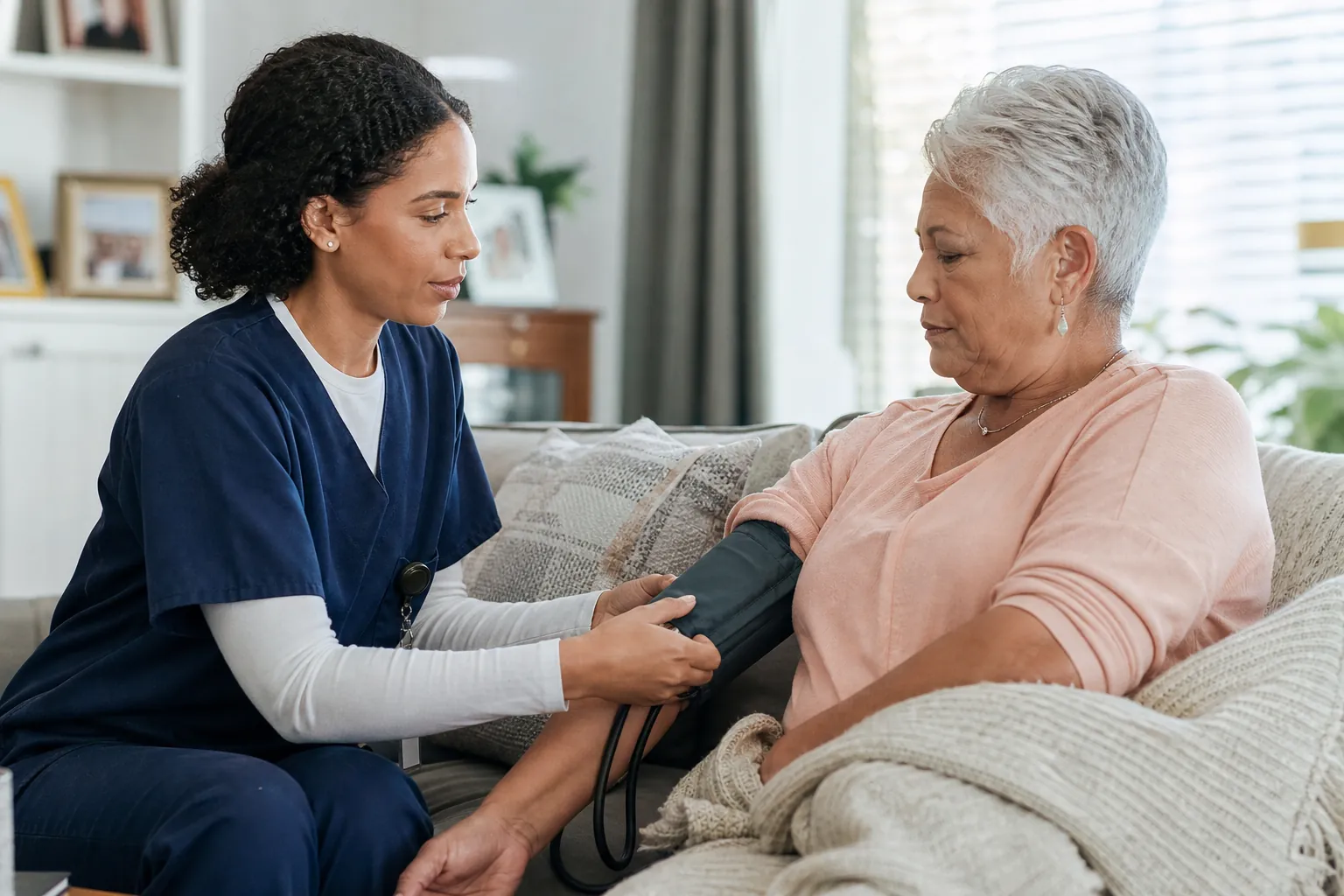
When a nurse comes to the home for the first time, families often do not know what to expect or how to help. A skilled nursing visit has a purpose set by the clinician’s orders, and the nurse works through a routine to meet it. Knowing that routine helps the family have the right things ready and ask the right questions.
This guide is for families expecting a registered nurse (RN) or licensed practical nurse (LPN) in the home.
What the nurse usually does
Reviews the orders. The nurse confirms what the clinician has ordered: medicines, wound care, tube care, monitoring, or other tasks.
Checks how the person is doing. This usually includes vital signs such as blood pressure, pulse, temperature, and breathing, plus questions about pain, eating, sleep, and anything new.
Does the ordered tasks. Examples include giving an injection, changing a dressing, caring for a feeding tube, or checking a catheter.
Reviews the medicines. The nurse compares the medicines in the home with the current orders and looks for anything missing, duplicated, or changed.
Teaches. The nurse may show the family or caregiver how to do a task, what to watch for, and when to call.
Records and reports. The nurse writes down what was done and found, and contacts the clinician when something has changed.
An RN can assess the person and plan nursing care. An LPN carries out nursing tasks under the direction of an RN or a physician.
How the family can prepare
Keep the current medicine list and all medicine bottles in one place
Write down questions and changes since the last visit
Have supplies ready and stored where the nurse can reach them
Make sure the area is lit and there is a clean surface for the nurse to work on
Tell the nurse how to reach the family member who makes decisions
OPA’s free Medications and Allergies sheet and Observation Log help with the medicine list and the list of changes.
Questions worth asking the nurse
What did you find today, and did anything change?
What should we watch for before your next visit?
When should we call you, and when should we call 911?
Is there anything we are doing that we should change?
How nursing fits with other help
A nursing visit covers specific clinical tasks. Help with bathing, meals, and supervision between nursing visits comes from family or a home care aide. OPA’s guide to home care, home health, hospice, and palliative care explains how these services fit together.
A first step before the first visit
Gather every medicine bottle in the home into one bag or box, and write three questions for the nurse.
OPA provides skilled nursing and personal care at home. To talk through what your family member needs, see how care starts at OPA.
This is general information, not medical advice. Call 911 for an immediate emergency. Nursing roles are set by state law. Confirm current requirements before acting.
Guidance behind the home plan
MedlinePlus's home-care overview distinguishes nursing and other health care from help with everyday tasks. Use the person's own clinical instructions when arranging care.
MedlinePlus's visit-preparation guidance recommends current medicine and allergy lists, written questions, and a record of symptoms. Use the person's own clinical instructions when arranging care.
Turn the instructions into a shared home plan
Use the Care Coordination Grid from OPA's Knowledge Center to name who handles appointments, daily routines, and the next handoff. Keep the treating team's instructions and contact details alongside the schedule. Talk with OPA about skilled nursing at home when the household needs another layer of help, and confirm the specific tasks and schedule before care starts.
